
Blog
Digital Marketing for Beginners: A Simple Guide to Start in 2026
The way people search for products, explore services and choose brands has changed significantly with the growth of the internet. Nowadays, businesses use digital platforms to introduce their products, connect with potential customers and build their online presence.
This is where digital marketing becomes important.
Whether you are a student, a business owner or someone planning to enter the marketing field, learning digital marketing can help you discover new opportunities. It is a broad field with different techniques and platforms that businesses use to reach their goals.
In this guide, you will learn what digital marketing is, why it matters, its different types, the skills you need and how you can begin your journey as a beginner.
1. What Is Digital Marketing?

Digital marketing refers to promoting a business, product or service using online platforms and digital channels. It helps businesses reach people through websites, search engines, social media networks, email campaigns and online advertisements.
One of the main advantages of digital marketing is that businesses can connect with specific audiences and track how their marketing activities perform. This makes it easier to understand customer interests and improve marketing strategies.
Example: Think about a clothing shop that shares its new collections on Instagram, works on SEO to appear in Google search results and uses paid advertisements to reach potential buyers. All these activities come under digital marketing.
2. Why Is Digital Marketing Important?

Digital marketing plays an important role in helping businesses become more visible and connect with customers online. Here are some reasons why it has become useful for businesses of all sizes.
Reaches the Right Audience
Businesses can show their products and services to people based on their interests, location, age group and preferences. This makes it easier to connect with potential customers who may be interested in what they offer.
Works with Different Budgets
Digital marketing is suitable for businesses with different financial resources. Small businesses can start by creating organic content, while larger businesses can combine organic strategies with paid advertising.
Helps Measure Marketing Performance
With the help of analytics tools, marketers can understand how people interact with their websites and campaigns. They can track website visits, clicks, engagement, leads and conversions to identify which strategies are performing well.
Builds Brand Recognition
Sharing useful information, posting regularly and staying active on digital platforms can help businesses become more familiar to their audience. Over time, this can improve brand recognition and customer confidence.
3. Major Types of Digital Marketing
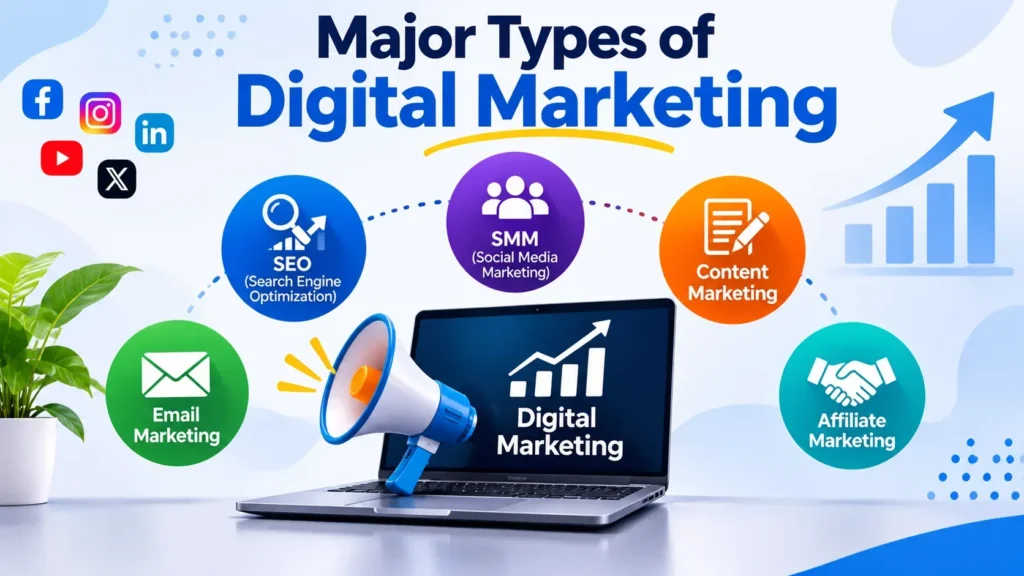
There are different ways to promote a business online. Each digital marketing method has its own purpose and helps businesses connect with their audience in different ways.
1. Search Engine Optimization (SEO)
SEO is the process of improving a website so that it can appear more prominently in organic search results. It involves researching relevant keywords, improving website content, fixing technical issues and earning quality backlinks.
2. Social Media Marketing (SMM)
Social media marketing is about using platforms such as Instagram, Facebook, LinkedIn, Pinterest and YouTube to promote a brand and interact with its audience. Businesses share posts, videos and other content to increase visibility, encourage engagement and attract potential customers.
3. Content Marketing
Content marketing involves preparing and sharing useful content that provides information, answers questions and attracts the right audience. Blog posts, articles, videos, infographics and educational guides are some popular examples.
4. Email Marketing
Email marketing allows businesses to communicate directly with people who have subscribed to receive their messages. It is commonly used to share company updates, newsletters, special offers and product announcements while maintaining relationships with customers.
5. Search Engine Marketing (SEM) and PPC Advertising
Search engine marketing helps businesses promote their websites through paid advertisements on search engines. These ads can appear when people search for products, services or information related to a business.
PPC stands for Pay-Per-Click. It is an advertising model where advertisers generally pay when someone clicks on their advertisement.
6. Affiliate and Influencer Marketing
Affiliate marketing is a promotional method where individuals or publishers recommend products and receive a commission for qualifying purchases or actions.
Influencer marketing involves working with content creators who introduce a brand or product to their followers through social media posts, videos and other promotional content.
4. How to Learn Digital Marketing from Scratch
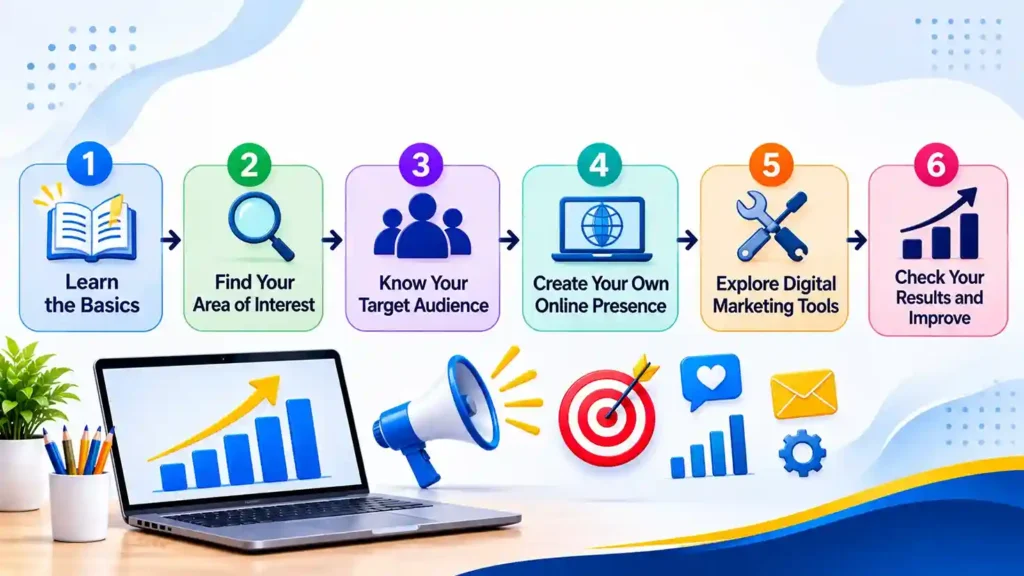
Starting something new can feel confusing, especially when there are many platforms and techniques to explore. Following a simple learning process can make your digital marketing journey easier.
Step 1: Learn the Basics
Start by understanding the main areas of digital marketing, including SEO, social media marketing, content creation, email marketing and paid advertising. Learning these fundamentals will help you understand how online promotion works.
Step 2: Find Your Area of Interest
Explore different digital marketing activities and discover which ones interest you the most. You might enjoy website optimization, managing social media accounts, creating content or running advertising campaigns.
Step 3: Know Your Target Audience
Learn about the people you want to reach. Understand their interests, needs, preferences and common problems. This knowledge helps you create content and campaigns that are relevant to them.
Step 4: Create Your Own Online Presence
Build a personal website, start a blog or create a professional social media account. These platforms give you an opportunity to practise your skills, share ideas and display your work.
Step 5: Explore Digital Marketing Tools
Get familiar with useful tools such as Google Analytics, Google Search Console, Google Keyword Planner and Canva. Spend time exploring their features and practising how they are used in marketing activities.
Step 6: Check Your Results and Improve
Regularly review your work and understand how your website, content and campaigns are performing. Identify what needs improvement and use those observations to develop better strategies.
5. Essential Skills for Digital Marketers
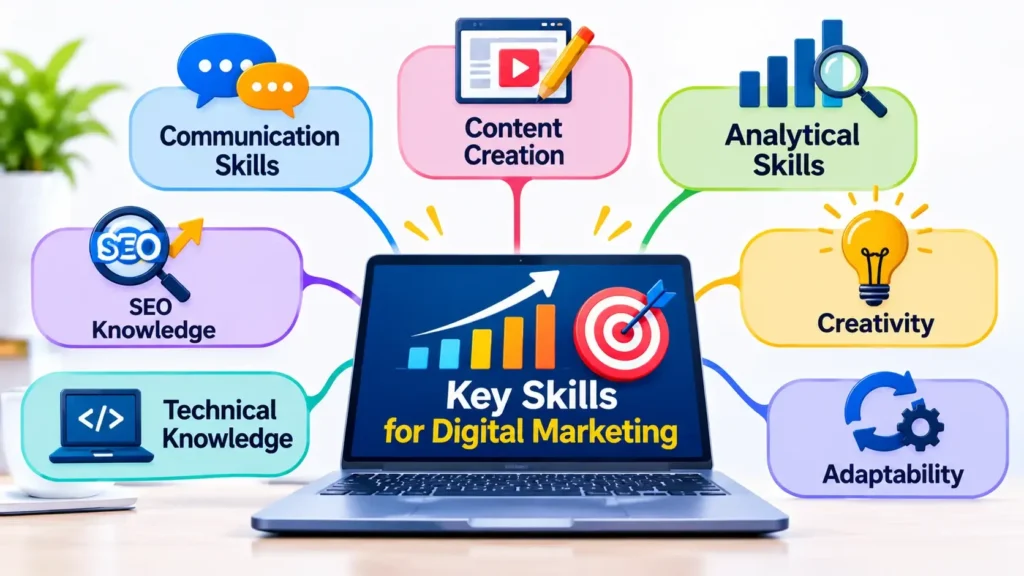
Digital marketing requires more than just knowing how to use online platforms. Developing a combination of creative, technical and analytical abilities can help you become a better marketer.
- Communication Skills : Sharing information clearly through written content, visuals and other digital channels.
- SEO Knowledge : Understanding keyword research, search intent, website optimization and search engine guidelines.
- Content Creation : Preparing interesting and useful content that matches the needs of different audiences.
- Analytical Skills : Reviewing marketing data and understanding the performance of websites and campaigns.
- Creativity : Coming up with fresh ideas for social media content, advertisements and promotional activities.
- Technical Knowledge : Learning to work with websites, analytics tools and different digital marketing platforms.
- Adaptability : Keeping up with changes in digital platforms, marketing technologies and industry trends.
6. Common Digital Marketing Mistakes Beginners Should Avoid
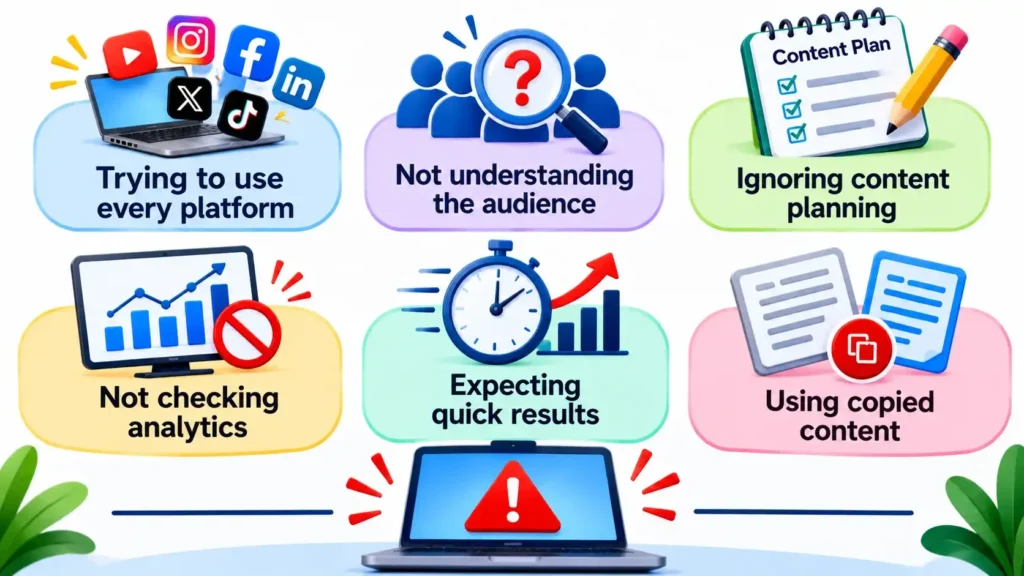
While learning digital marketing, it is normal to face challenges and make mistakes. However, understanding some common problems can help you improve your approach.
- Trying to use every platform: Focusing on too many channels at once without a clear plan can make marketing activities difficult to manage.
- Not understanding the audience: Creating content without researching customer interests and needs may fail to attract the right people.
- Ignoring content planning: Posting randomly without a proper schedule or strategy can affect consistency and audience engagement.
- Not checking analytics: Failing to review performance data makes it harder to identify successful campaigns and areas that need improvement.
- Expecting quick results: Digital marketing takes time, regular effort and continuous learning. Building visibility and customer trust does not usually happen overnight.
- Using copied content: Publishing other people’s work without adding original value can affect your brand’s credibility and content quality.
Frequently Asked Questions
What is digital marketing in simple words?
Digital marketing means promoting products, services or brands through online channels such as websites, search engines, social media and email.
Can someone with no experience learn digital marketing?
Yes. Anyone interested in this field can begin by learning the basic concepts, practising with digital marketing tools and working on small projects to gain experience.
Do I need coding knowledge for digital marketing?
No. Most digital marketing activities do not require coding skills. However, knowing basic website development and technical concepts can be an added advantage.
How long does it take to learn digital marketing?
What is the best digital marketing skill for beginners?
SEO and content marketing are useful areas to start with. They help beginners understand how people search online, what information they need and how businesses can reach them.
Final Thoughts
Digital marketing offers many opportunities for people who want to understand the online business world. It helps businesses reach new audiences, communicate with customers and improve their online visibility.
If you are just starting, focus on learning the basics, exploring different marketing channels and practising what you learn. Be consistent, stay curious and keep improving your skills. With time and practical experience, you can build a strong foundation and move forward in your digital marketing journey.